Modern property security has evolved far beyond traditional locks, physical keys, and manual entry systems. Businesses, residential communities, warehouses, apartment complexes, and homeowners now require smarter, more secure, and more convenient ways to control access to their properties. This growing demand has led to the rapid adoption of smart access control systems, which combine advanced security technologies with automation and remote management capabilities.
Smart access control systems are transforming how properties manage security by providing greater control, improved monitoring, flexible user management, and seamless connectivity. Whether it is a residential gate, commercial building entrance, warehouse access point, or industrial facility, modern access control solutions help property owners create safer and more efficient environments.
As technology continues to advance, access control systems are becoming increasingly intelligent and integrated with mobile devices, cloud platforms, video intercoms, surveillance cameras, and smart automation technologies. These systems now offer a complete security ecosystem designed for modern residential and commercial applications.
What Is a Smart Access Control System?
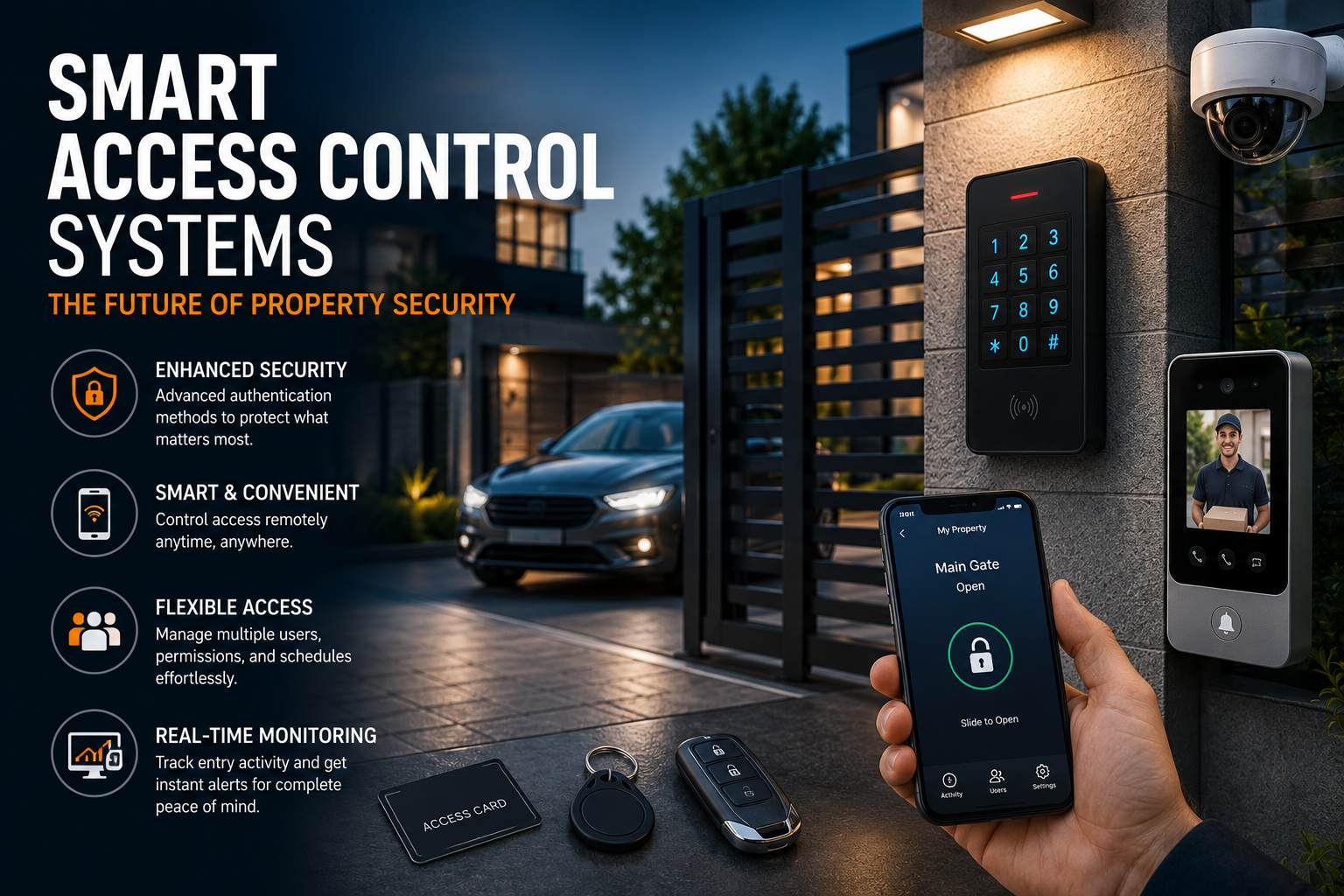
A smart access control system is a security solution designed to regulate and monitor entry to a property, building, gate, room, or secured area using electronic authentication methods instead of traditional physical keys. These systems allow authorized users to gain access through PIN codes, smartphones, RFID cards, biometric authentication, Bluetooth credentials, or cloud-based user permissions.
Unlike conventional lock-and-key systems, smart access control solutions provide centralized management capabilities and real-time monitoring. Property owners and administrators can remotely manage access permissions, monitor activity logs, receive alerts, and instantly update user credentials from virtually anywhere.
Modern access control systems are designed to improve both security and convenience while reducing the risks associated with lost keys, unauthorized duplication, or uncontrolled access.
Why Smart Access Control Systems Are Becoming Essential
Security requirements for residential and commercial properties continue to increase as property owners seek better ways to manage access and protect assets. Traditional locks alone are no longer sufficient for many modern environments.
Smart access control systems help solve several major challenges by improving visibility, accountability, and operational efficiency. These systems allow businesses and homeowners to know exactly who enters the property, when they entered, and which areas they accessed.
For commercial facilities, this level of monitoring helps improve workplace security while simplifying employee and visitor management. Residential users benefit from safer property access, remote gate control, and convenient smart home integration.
Access control systems also reduce the need for physical keys, which are often lost, copied, or difficult to manage in large properties or organizations. Digital credentials provide more flexibility and can be modified instantly whenever access permissions need to change.
The Growing Role of Smart Technology in Security
One of the biggest reasons for the popularity of modern access control systems is the integration of smart technologies. Today’s systems are no longer isolated security devices. They are connected platforms that integrate with smartphones, cloud management software, surveillance systems, and automation technologies.
Smart access systems now allow users to:
- Unlock gates and doors remotely
- Receive visitor notifications in real time
- Monitor entry activity from mobile devices
- Grant temporary guest access
- Manage multiple users and properties
- Integrate with video surveillance systems
- Create scheduled access permissions
- Automate security workflows
This level of connectivity creates a much more efficient and user-friendly security environment for both residential and commercial applications.
Video Intercom Systems and Smart Visitor Management
Video intercom systems have become one of the most important components of modern access control solutions. These systems allow property owners to visually verify visitors before granting access, significantly improving security and visitor management.
Modern video intercom systems include advanced features such as HD video streaming, night vision, motion detection, mobile application support, cloud recording, and two-way audio communication. Users can answer visitor calls and unlock gates directly from their smartphones, even when they are away from the property.
Residential homeowners use video intercom systems to improve family safety and monitor deliveries or visitors remotely. Commercial properties benefit from more professional visitor management and improved perimeter security.
Apartment complexes, gated communities, office buildings, and industrial facilities increasingly rely on video intercom technologies to create secure and controlled access environments.
Wireless Keypads and PIN-Based Access
Wireless keypad systems continue to be one of the most practical and widely used access control solutions. These systems allow authorized users to enter a PIN code to gain access without requiring physical keys or remote controls.
Modern wireless keypads are designed for convenience, durability, and secure communication. Many models support multiple user codes, temporary visitor PINs, weatherproof construction, and encrypted wireless technology.
Wireless keypads are particularly useful for:
- Residential driveways
- Commercial gates
- Employee entrances
- Service access points
- Gated communities
- Warehouse facilities
One major advantage of wireless keypad systems is their flexibility. Property managers can easily add or remove user credentials without replacing locks or distributing new keys.
Temporary access codes also make it easier to manage contractors, delivery personnel, guests, or maintenance staff while maintaining overall property security.
RFID Access Systems and Credential Management
RFID access systems use radio-frequency identification technology to grant access through cards, tags, key fobs, or mobile credentials. These systems are commonly installed in office buildings, parking facilities, warehouses, apartment complexes, and commercial properties.
RFID systems provide fast and reliable access control while improving overall operational efficiency. Unlike traditional keys, RFID credentials can be deactivated instantly if lost or compromised.
Businesses particularly benefit from RFID access management because it allows administrators to track employee access activity, manage restricted areas, and maintain detailed entry records.
Modern RFID systems are also increasingly integrated with cloud-based platforms, enabling centralized management across multiple locations and facilities.
Mobile Access and Cloud-Based Security Management
Smartphone integration has become one of the defining features of modern access control systems. Mobile access technologies allow users to manage property security directly from their phones or tablets.
With mobile-enabled access control systems, users can:
- Open gates remotely
- Unlock doors from anywhere
- Receive security alerts
- Monitor live access activity
- Grant temporary access permissions
- Control multiple entry points
- Manage visitor access remotely
Cloud-based security management platforms further enhance these capabilities by providing centralized control and real-time system monitoring.
Commercial businesses especially benefit from cloud-connected systems because administrators can manage multiple facilities without needing on-site security infrastructure at every location.
Cloud systems also simplify software updates, credential management, and system maintenance while improving scalability for growing organizations.
Commercial Applications of Access Control Systems
Commercial and industrial facilities rely heavily on smart access control systems to improve operational security and manage daily activity.
Office Buildings
Office environments use access control systems to regulate employee entry, protect restricted areas, and manage visitor access.
Modern office access systems help businesses:
- Improve workplace security
- Monitor employee access activity
- Control access schedules
- Reduce unauthorized entry
- Protect sensitive areas
- Simplify credential management
Smart access systems also improve convenience for employees by supporting touchless entry methods and mobile-based access credentials.
Warehouses and Industrial Facilities
Industrial environments require highly reliable and scalable security solutions due to larger operational areas and higher security risks.
Access control systems in industrial facilities help manage:
- Employee access
- Delivery traffic
- Contractor entry
- Vehicle access control
- Restricted zones
- Equipment security
High-duty cycle systems combined with surveillance and automation technologies create safer and more efficient industrial operations.
Gated Communities and Residential Complexes
Residential communities increasingly rely on access control technologies to improve resident safety and visitor management.
These systems commonly include:
- Automated gate operators
- Video intercom systems
- RFID access credentials
- Mobile gate control
- Visitor management platforms
- Smart monitoring systems
Residents benefit from improved convenience while maintaining controlled access to the community.
The Importance of Security and Encryption
As access control systems become more connected, cybersecurity and encrypted communication are becoming increasingly important.
Modern smart access solutions use advanced encryption technologies to protect communication between devices, cloud platforms, and mobile applications. This helps prevent unauthorized access attempts and improves overall system security.
Property owners should always choose trusted and professionally designed systems that prioritize secure communication protocols and reliable software support.
Choosing the Right Access Control Solution
Selecting the correct access control system depends on several important factors including property size, user volume, security requirements, and desired smart features.
When evaluating systems, property owners should consider:
- Scalability
- Mobile integration
- Cloud connectivity
- User management flexibility
- Weather resistance
- Remote monitoring capabilities
- Compatibility with existing systems
- Long-term maintenance requirements
Professional consultation and installation help ensure the selected system meets both current and future security needs.
Professional Installation and Maintenance
Proper installation is critical for reliable access control performance. Professionally installed systems are more secure, more efficient, and less likely to experience operational issues.
Routine maintenance should include:
- Firmware updates
- Camera inspections
- Credential management reviews
- Battery backup testing
- Sensor inspections
- Connectivity testing
Regular maintenance helps maintain system reliability while improving long-term security performance.
The Future of Smart Access Control
The future of access control is becoming increasingly intelligent, automated, and cloud-driven. Artificial intelligence, facial recognition, mobile-first security, and predictive analytics are expected to play major roles in next-generation systems.
Emerging technologies will continue improving both security and convenience while creating more seamless user experiences.
Future innovations may include:
- AI-powered visitor verification
- Advanced behavioral analytics
- Fully touchless access systems
- Voice-enabled access control
- Enhanced cloud automation
- Smarter mobile integrations
These advancements will continue shaping the future of property security across residential, commercial, and industrial environments.
Final Thoughts
Smart access control systems have become essential for modern property security and access management. From residential gates and commercial buildings to industrial facilities and gated communities, these systems provide improved security, centralized management, and enhanced convenience.
By combining automation, mobile connectivity, cloud management, and intelligent monitoring, modern access control solutions create safer and more efficient environments for both homeowners and businesses.
As technology continues evolving, investing in smart access control systems is no longer just about security. It is about creating smarter, more connected properties that offer long-term reliability, flexibility, and peace of mind.